Health and Safety Policy for End of Tenancy Cleaning
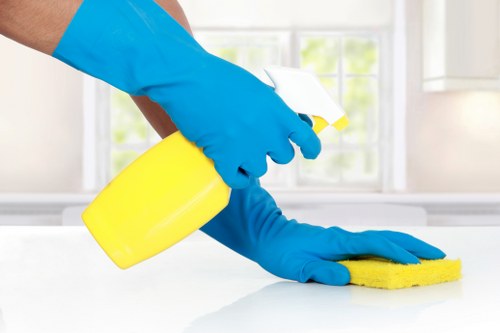 This Health and Safety Policy sets out the standards and responsibilities required to carry out end of tenancy cleaning safely, professionally, and with care for staff, occupants, clients, and property. Our aim is to reduce risk, prevent injury, and ensure every end of tenancy cleaning service is delivered in a controlled and consistent way. We recognise that cleaning vacant or partly occupied properties can involve hazards such as slips, sharp objects, chemical exposure, electrical risks, and manual handling strain.
We are committed to maintaining a safe working environment by identifying hazards before work begins, using suitable equipment, and following clear procedures. All team members involved in end-of-tenancy cleaning are expected to act responsibly, report concerns promptly, and follow safe working methods at all times. Safety is treated as an essential part of service quality, not an optional extra.
Policy Statement
Our policy is to take all reasonably practicable steps to protect health and safety during tenancy cleaning operations. This includes assessing the condition of each property, choosing appropriate tools and products, and ensuring personnel are trained to work safely. We expect everyone involved in move-out cleaning to support a culture of awareness, prevention, and respect for the spaces they clean.
Responsibilities
Management responsibilities include providing safe equipment, maintaining cleaning materials, ensuring training is completed, and acting on any reported incidents or near misses. Managers must also confirm that workers understand key risks associated with end of tenancy cleans, including use of detergents, lifting heavy items, and working in confined or poorly ventilated rooms.
Employees and contractors must take reasonable care of their own health and safety and that of others who may be affected by their actions. This means using gloves and other suitable PPE when necessary, checking labels before using chemicals, and never mixing products unless expressly permitted by manufacturer instructions. Workers should avoid unsafe shortcuts and stop work if a task appears hazardous.
Risk Assessment and Safe Systems of Work
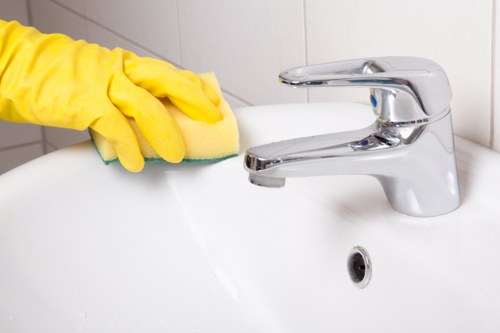 Before any end of tenancy cleaning assignment begins, a basic risk assessment should be completed. This helps identify issues such as broken glass, mould, damaged flooring, exposed wiring, pest contamination, or blocked access routes. Where risks are found, suitable controls must be put in place before cleaning continues. If a task cannot be completed safely, it must be postponed until the hazard is removed or managed.
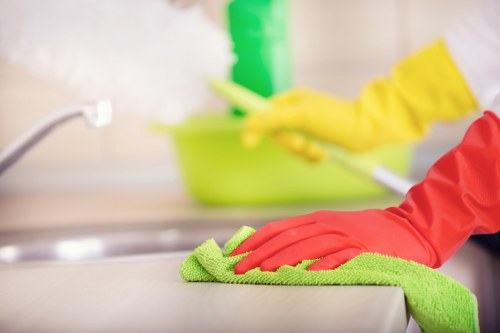 Safe systems of work are used to control routine cleaning tasks. These include ventilating rooms when using strong products, keeping walkways clear, storing tools securely, and using step stools correctly when reaching high areas. For end of tenancy cleaning services, special care must be taken in kitchens, bathrooms, and utility spaces where moisture, residues, and slippery surfaces increase the chance of accidents.
Manual handling is a common risk in tenancy cleaning, particularly when moving lightweight furniture, bins, or equipment. Staff should plan lifts in advance, keep loads close to the body, and ask for assistance with awkward or heavy items. Repetitive movements should also be managed by taking short breaks and alternating tasks where possible. Good posture and sensible pacing help reduce strain and fatigue.
Chemical safety is another essential part of this policy. Cleaning products must be used according to instructions, stored in their original containers where possible, and kept away from heat or incompatible substances. Team members carrying out deep end of tenancy cleaning must understand the purpose, dilution, and limitations of each product they use. Gloves, eye protection, or masks should be worn when required by the task or the material being used.
Working Environment and Equipment
All equipment used for end of tenancy cleaning should be maintained in safe working order. Cables, plugs, sockets, vacuums, steam tools, and other electrical devices must be checked before use. Damaged equipment must be removed from service immediately. Water and electricity must be kept separate wherever possible, and extra care should be taken in bathrooms, kitchens, and other damp areas.
Housekeeping is central to safety. Floors should be kept free from obstructions, spills should be cleaned quickly, and waste should be bagged and removed in a controlled manner. Broken items such as glass, ceramics, or sharp fittings must be handled carefully and disposed of safely. For after tenancy cleaning, attention to tidiness helps prevent trips, cuts, and contamination.
Personal Protective Equipment
Suitable personal protective equipment may be required depending on the task. This can include gloves, aprons, non-slip footwear, eye protection, and respiratory protection where there is dust, mould, or strong fumes. PPE must be properly fitted, used correctly, and replaced when damaged or contaminated. It should supplement, not replace, other safety controls in end of tenancy cleaning operations.
Incident reporting is mandatory for all accidents, injuries, near misses, and unsafe conditions. Reports should be made as soon as possible so that action can be taken to prevent recurrence. If a serious incident occurs, work must stop and emergency procedures followed. Staff should know how to respond to fire, electrical hazards, spills, and exposure incidents during tenancy cleaning work.
Training and supervision are vital to maintaining safe standards. New workers must be instructed in basic hazards, product handling, safe use of tools, and emergency steps before carrying out tasks independently. Refresher training may be provided when equipment changes, risks increase, or procedures are updated. Competence is especially important in professional end of tenancy cleaning, where time pressure should never override safety.
Monitoring and Review
 This policy will be reviewed regularly to ensure it remains effective and suitable for the types of work carried out. Changes may be made following incidents, operational updates, or the introduction of new products and equipment. Monitoring includes observing work practices, checking compliance with procedures, and encouraging improvements where necessary.
 By following this Health and Safety Policy, we support a safer approach to end of tenancy cleaning and help protect everyone involved in the process. Safety depends on preparation, communication, and disciplined working habits. Through consistent attention to risk, our end of tenancy cleaning policy helps deliver reliable results while reducing the chance of harm.